What We Were Self-Medicating: The Chair Conversations, Session Four
Founder & Principal Consultant · NIH CHORUS Co-Author
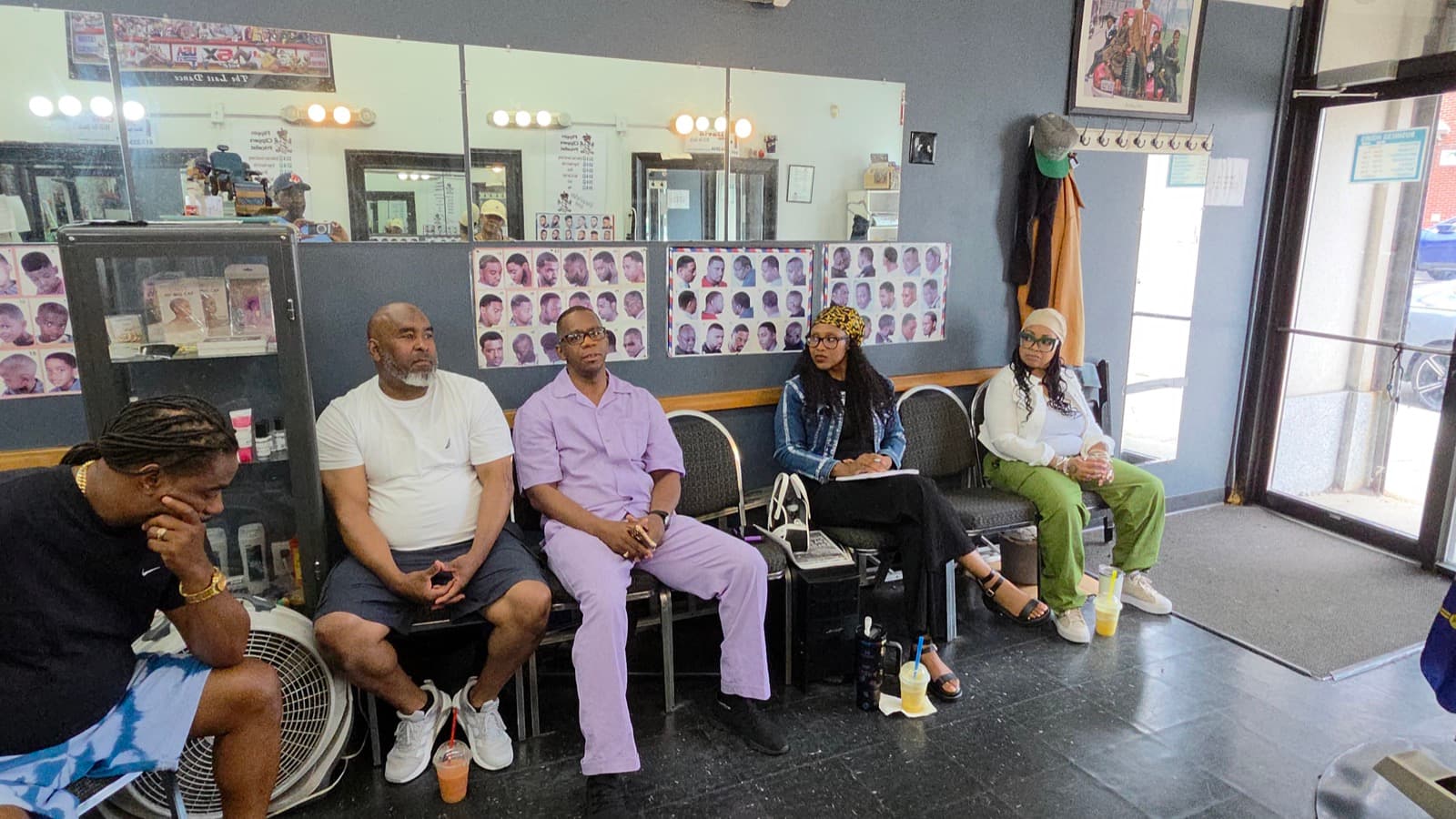
Nobody wakes up one day and decides to become addicted. So what were we running from?
Session Four asked it plainly, and the room answered without flinching. Then it went one layer down, to the question most people never get asked.
The Last Chair
Back in the shop for the finale — about nine people, held steady the way every session held steady. A man from transitional living, a young adult, professionals who work in the field, and, as the barbershop always does, people who simply walked in. The room was mixed on purpose and mixed by accident, and both kinds of mixing did the same work.
Who pulled up a chair
Transitional living
A young adult
Professionals in the field
Barbershop walk-ins
Vendors passing through
A postal worker who stayed
The shop did not clear the room for us. The room folded the shop in.
What We Were Medicating From
The pilot had been building to this. Repressed pain makes a void; something has to fill it. Session Four named what the void was actually made of for a lot of people in the room: shyness, social awkwardness, not knowing your own identity, and the pressure to fit a popular consensus you never agreed to.
And then Tye moved the label.
“Who told you you were awkward in the first place?”
— Tye Perryman
Most of the room said the same thing: culture, and society. Which means the awkwardness was never a fact about the person. It was a standard handed to them from the outside, and then carried as if it were true. Move the label and the whole story moves with it — you were not broken, you were measured against something that was never yours.
Recovery Is Culture
By the last session the frame had a shape, and the room gravitated to it: recovery is the foundation, human development is the direction, and identity is the work in the middle.
“Recovery as culture. Human development as identity.”
Connection, belonging, autonomy — being part of something larger than the thing you were running from.
The Deficit Contract™, introduced the session before, had already landed. Here it paid off: if the deficit was a label imposed from the outside, then development is the process of naming yourself from the inside.
The Shop Answered the Question
The best proof of the whole pilot did not come from the facilitation. It came from the room being a barbershop.
The session opened with a short walk to a nearby herbal shop before circling back. Steve, a longtime pillar of the block, ran a segment. Stephen Wright of AHOPE brought a naloxone training into the room. And while the conversation ran, the ordinary life of the shop kept folding in: a watermelon vendor, a hemp and skincare vendor, and the local postal worker each stopped, engaged, and lingered. Nobody recruited them. The space was already a trust node before we ever set up chairs — the pilot just made that visible.
What Four Sessions Proved
Nine people, one barbershop, four Mondays built in under a month. Here is what the room made undeniable.
Pain does not track status
A resident from transitional living and a nonprofit director carried the same hurt the same way.
The room wanted presence
Not a referral. What people responded to was environment: safety, attention, being heard.
Belonging, not just resources
The professionals came to offload what the work costs them, and to be in the room with the people they serve.
Chair Conversations was never the destination. It is small-scale evidence that the ecosystem works — and the evidence base for moving the work into the Insightful Lounge.
The Room Didn't Want It to End
When Tye said it was the last session, the room went quiet in a different way. People texted afterward: we need more of this. The grief was not about the ending. It was proof of the demand — you do not mourn a thing you were ready to leave.
The Founding Pilot · Complete
Four sessions. One barbershop. Under a month.
The Chair Conversations pilot is done, and the room asked for what comes next. If you want to help the work continue — in this shop and the next one — there is a seat for you.
Bring it to your communityFund the road ahead? Sponsor a session — the community walks it free.
The full series
- Session One — We Don't Talk About It
- Session Two — Somebody You Love
- Session Three — What Recovery Actually Looks Like
- Session Four — What We Were Self-Medicating (you are here)
The Chair Conversations™ is presented by Insightful Recovery Solutions LLC under The Insightful Way™, with Flipping Clippers in Codman Square as its home shop. Session Four included a naloxone training led by Stephen Wright of AHOPE. With thanks to the partners and contributors who carried the pilot: Voice and Vison LLC, Rock Bottom Survivors LLC, Blake Media, and Jeffrey Tripp. What is shared in the circle stays in the circle — nothing in this recap identifies any participant or reproduces anything said in it.
Disclaimer: This content is not medical advice. Insightful Recovery Solutions provides non-clinical recovery support services. This article is educational and peer-oriented — it does not replace professional medical care, therapy, or treatment. If you are experiencing a mental health crisis, thoughts of self-harm, or a medical emergency, call 988 (Suicide & Crisis Lifeline), contact SAMHSA's National Helpline at 1-800-662-4357, or go to your nearest emergency room.